Nightmares: what they mean and what to do with them
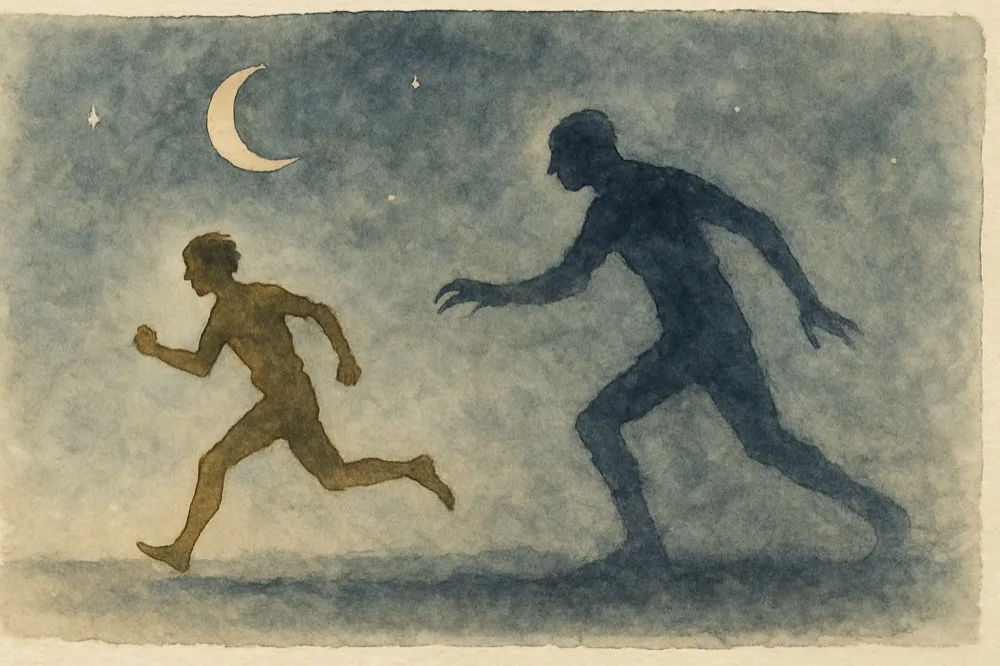
A nightmare is a dream whose fear is strong enough to wake you. Almost everyone has them, and most people have a few that stay for years. They can feel like attacks from inside. In the Jungian method they are better understood as urgent dreams: images the psyche has made frightening because something in them matters. This page sets out how that approach works and gathers our guides to the commonest kinds.
What nightmares are doing
Jung saw dreams as compensating for the conscious attitude, showing what it leaves out. A nightmare does this forcefully. The pursuer, the flood, the intruder, the fall: each tends to stand for something you would rather not look at, made frightening because it has not been allowed in any other way. The figure that terrifies you is often part of you, what Jung called the shadow. Turning toward it, slowly and in daylight, is usually more fruitful than trying to forget it.
The common kinds
- Sleep paralysis dreams. Waking unable to move, often with a presence in the room, and dreams in which you are paralysed.
- Recurring nightmares. The same nightmare returning, why it happens and practices that can help.
- Dreams about being chased. The commonest nightmare of all, and what the pursuer may want.
- Dreams about falling. Losing ground or control, and the jolt that wakes you.
Nightmares about the people closest to you
- Nightmares about your ex. When a past relationship returns as a frightening dream.
- Bad dreams about your boyfriend. Repeated bad dreams about a partner, and what they may be showing.
- Nightmares about pregnancy. Frightening dreams of pregnancy and birth, whether or not you are expecting.
Why nightmares come when they do
Nightmares tend to cluster around pressure: illness, conflict, grief, exams, a new job, a relationship ending. They also follow frightening events. The timing is worth noting, because it often points to what the nightmare concerns. If they have become a recurring pattern, our guide to recurring dreams covers the wider picture.
Nightmares after trauma
Jung observed that after a shock, dreams can repeat the event almost unchanged. These are less symbolic than ordinary nightmares, and interpreting them is not the first step. If your nightmares replay something that happened to you, please see the section below.
What to do after a nightmare
Write it down once you are calm, including what you did in the dream and how it ended. Ask what the frightening figure or event would be in waking terms. Notice whether the dream changes over time. In daylight, the practice of active imagination can help you meet the image without being overwhelmed. For the general method, see how to interpret your dream.
When to talk to someone
Talk to your GP if nightmares are frequent, if they make you dread sleep, if you are exhausted in the day, or if they began after a traumatic event. Your GP can refer you to a sleep clinic or a therapist. Reflection on dreams is not a substitute for that care.
Common questions
What do nightmares mean?
In the Jungian method a nightmare usually pictures something avoided, feared or unresolved, made frightening so that it is noticed. The frightening figure is often part of the dreamer. Your own associations decide the meaning.
Are nightmares a bad sign?
Usually not. Almost everyone has nightmares, and they tend to cluster around stress or change. If they are frequent, disrupt your sleep, or replay a traumatic event, talk to your GP.
Why do I keep having nightmares?
Nightmares that keep returning often point to something that has not yet been faced or resolved, or to an ongoing pressure. Noting when they come is often the best clue to what they concern.
Written by the Coniunctio editorial team and reviewed against our editorial standards. Coniunctio offers reflection, not diagnosis or prediction. If a dream is tied to distress, please speak to a professional.
Related guides
What is Coniunctio?
A dream can stay with you all day and still make no sense. Coniunctio analyses it in Jung's method, symbol by symbol, so you can see what it is working on and what to do with it.
- A Jungian analysis of your dream, symbol by symbol
- A ritual to work with it: three offered, you choose one
- Follow-up questions and notes on every analysis
- A dream archive that grows as you feed it