What is Jungian dream analysis, and how does it work?
Last updated: October 2026
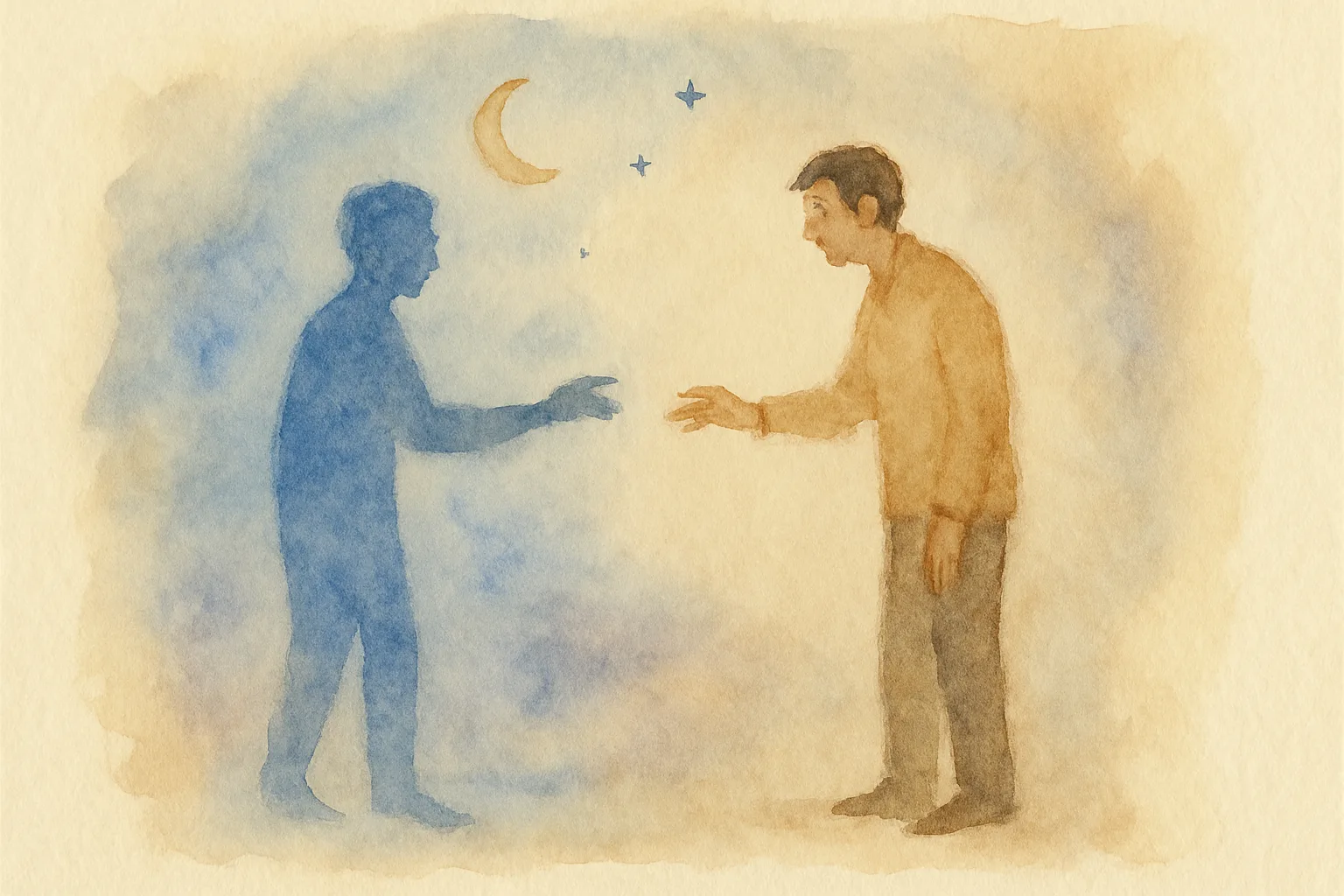
Jungian dream analysis is Carl Jung's method for reading a dream as a statement from the unconscious about the dreamer's present situation. Each image is amplified with the dreamer's own associations and with parallels from myth, the dream is asked what it compensates for in the conscious attitude, and the reading ends in options rather than a verdict.
It is a method, not a dictionary. The same image can point in opposite directions for two dreamers, so the work starts from your associations and your life, and only then reaches for the wider pattern.
Jung broke with Freud partly over the dream. Freud treated it as a disguise to be stripped away; Jung treated it as the psyche speaking plainly in a language of images that consciousness has to learn. He called the dream "a little hidden door in the innermost and most secret recesses of the soul." What follows is the method as Jungian analysts practise it, the three terms you need, and one dream read from first image to final ritual.
How Jungian dream analysis differs from Freud
Both men took dreams seriously as a route to the unconscious. They parted on what a dream is for. For Freud, the manifest dream hides a latent wish, usually one the dreamer would rather not know.
For Jung, the dream is not hiding anything. It says what it means, in images, and the difficulty lies in our unfamiliarity with the language. He also proposed a deeper layer beneath the personal unconscious, the collective unconscious, structured by archetypes: recurring patterns such as the shadow, the anima and animus, the mother, the trickster. So a dream image is read on two layers at once. Your flood is your particular flood, and it is also the old image of the waters.
Jung allowed one further function: a dream can be prospective, sketching a direction the dreamer is already moving in, the way a rehearsal anticipates a performance. That is why a Jungian reading asks "where is this pointing?" as often as "where did this come from?"
Amplification, compensation and active imagination, defined
Three terms carry most of the method. Each has a precise meaning, and each is often used loosely.
Amplification
Amplification is the Jungian practice of enriching a dream image with the dreamer's personal associations and with parallels from myth, religion and folklore, so that the image's full range of meaning becomes visible. Free association moves away from the image, one link at a time, until the image is gone. Amplification circles back to it. The parallels are not imposed as the answer; they show what the dream chose when it chose this image.
Compensation
Compensation is Jung's term for the dream's balancing function: the dream presents what the conscious attitude has neglected or overstated, so that a one-sided position can be corrected. Jung set this out in General Aspects of Dream Psychology (Collected Works, Volume 8). The practical question it gives you is simple. What is my waking stance right now, and what in this dream does not fit it?
Active imagination
Active imagination is a waking technique in which you return to a dream image, let it move or speak on its own, and respond to it as a real counterpart, usually recording the exchange in writing or drawing. Jung developed it from his own experiments between 1913 and 1916. Our guide to active imagination covers the steps and the cautions.
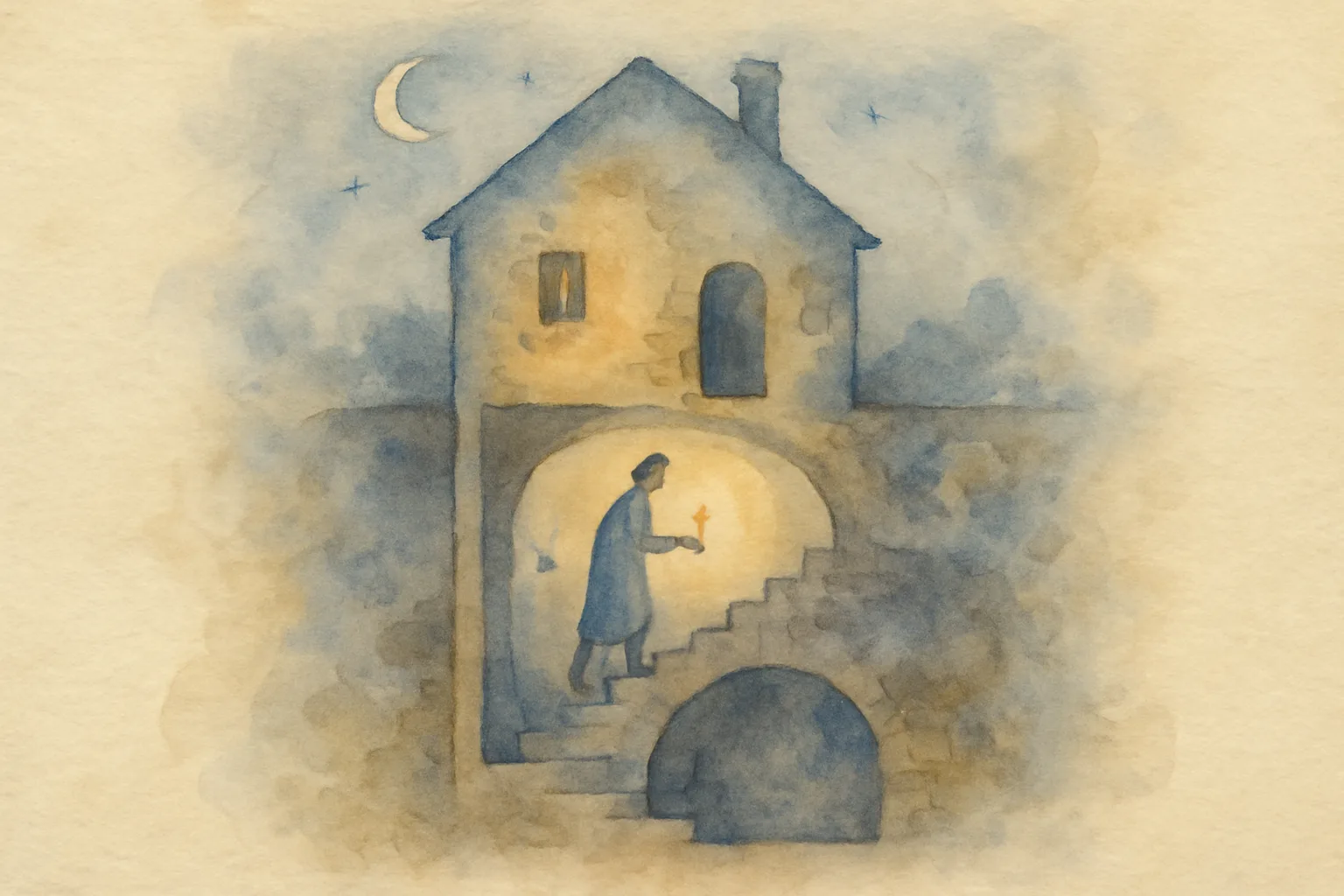
The personal layer and the archetypal layer
A Jungian reading always starts personal. Before any myth is consulted, the questions are yours. What do you associate with this image? What was the feeling in the dream, and where does that feeling live this week?
Only then does the reading widen. The archetypal layer is useful when an image carries more charge than your personal history explains, when a dream feels numinous or strange in a way your associations do not cover. Jung warned against starting there. An archetype read without the personal layer turns into a horoscope. The guide to Jungian symbols explains why the same image reads differently for every dreamer.
A worked dream, read in the method
The dream below is invented for this guide, with an invented dreamer, so the method can be shown end to end.
The dreamer. Forty-one, three months into a promotion, managing a team through a difficult quarter. She describes herself as "the one who handles things."
1. The images
Before interpreting anything, list what the dream actually contains: a familiar kitchen, an unknown door, a descent, standing water below the house, an unknown man, a teacup used for an impossible task, an offer left unanswered. Note the affect too. She reports no panic in the dream, only a strange calm, which matters.
2. Amplification
Her associations come first. Her grandmother's kitchen was the one place in childhood where she was looked after rather than relied on. The teacup belonged to her grandmother's four o'clock tea, the one fixed pause in a busy house. On the wider layer, the house is a long-standing image of the psyche in Jung's own work, with its upper rooms for the familiar and its cellar for older, deeper material. Water below ground is a recurrent figure for the unconscious, what has collected out of sight. A small vessel set against a great volume of water has old parallels in tales of impossible tasks, where the task is a test of patience more than strength.
3. Compensation
Her waking attitude is clear: competence, scale, handling everything at once. The dream shows something that attitude leaves out. Below the familiar rooms, water has been gathering, and the figure dealing with it is not heroic. He works calmly, at the scale of a teacup. Read as compensation, the dream sets a slow, small, steady measure against a conscious stance that only knows how to respond at full size.
4. Synthesis
A careful reading offers more than one option. One: feeling has been accumulating beneath her capable surface, and the dream proposes a small, regular way of attending to it rather than a crisis-sized one. Two: the grandmother's kitchen points to an older family pattern of coping, and the unknown door suggests there is more to that inheritance than she has looked at. Three: the unknown man may be a capacity of her own she does not yet recognise as hers. The unanswered offer is the open question in every reading: will she take the cup?
5. A ritual
A reading should not close with the tab. For this dream: make a cup of tea at four o'clock, and before drinking it write one sentence about what has been rising beneath the floor this month. Five minutes, once. The point is to accept the cup, at its own scale.
How to do Jungian dream analysis on your own
The method can be practised alone, within limits. A workable sequence:
- Write the dream down the morning it arrives, in the present tense, before you interpret anything.
- List the images and the feeling, including the feeling at the moment you woke.
- Gather your associations to each image before you look anything up.
- Name your current conscious attitude in one sentence, and ask what in the dream does not fit it.
- Write two or three possible readings and leave them side by side for a day.
- Keep the dream with your others, so a recurring image can be seen across weeks.
What is hard alone is holding several readings open without forcing one, and noticing your own blind spot, which is by definition the thing you cannot see. For the step-by-step version, see how to interpret dreams; for the record that makes patterns visible, see keeping a dream journal.
Has Jung been debunked?
Parts of Jung's theory have not held up as science, and it is better to say so. The collective unconscious and the archetypes have never been demonstrated experimentally, and many psychologists regard them as unfalsifiable. Some of his writing on race and nationality in the 1930s is rightly criticised. Academic psychology largely moved on from his framework.
Jungian dream analysis, though, is an interpretive method, not a predictive theory. It does not claim a dream has one measurable meaning. Its discipline lies in the process: staying close to the image, taking the dreamer's associations seriously, and testing readings against recognition rather than authority. Modern dream research has found that dream content tracks the dreamer's waking concerns and emotions, which is roughly the ground the method has always worked on. You can use the method without believing every claim Jung made.
Can ChatGPT do dream analysis?
Yes, in a limited sense. A general chatbot can produce a fluent symbol-by-symbol commentary on a dream you paste in, and it will often reach for Jungian vocabulary. What it does not do by default is hold your personal context, remember the dreams you told it last month, or follow a consistent method from one reading to the next. Each conversation starts from nothing, and the reading tends toward the general meaning of a symbol rather than yours.
Users notice this. One review of a dream app put it bluntly: "Dream analysis can't be meaningful without understanding personal context." Another dismissed an app as "essentially just ChatGPT." The question to ask of any AI reading is whether it starts from your associations and your life, and whether it can see your dreams as a series. For a fuller treatment, see can ChatGPT interpret dreams? and Jungian AI dream analysis.
A course teaches the method. This reads your dream.
If you want to learn Jungian dream work properly, a good course or dream group is a fine place to do it. Learning alongside other dreamers, guided by certified analysts, is a real education in the language of images.
A course and a reading do different jobs. A course teaches you how the method works, usually on other people's dreams, on a schedule. A reading applies the method to the dream you had last night, this morning, while the feeling is still in the room. Many people want both: the education, and somewhere to bring their own dreams between modules. Coniunctio is built for the second.
Where the method needs an analyst
Dream analysis in Jung's sense was developed inside a relationship, with a trained analyst who knows your history and can notice what you cannot. Recurring nightmares, dreams tied to trauma, or dreams that leave you destabilised belong with a clinician, not with a book or an app. If you are thinking about that step, see what a Jungian analyst does with your dreams, and what Jungian therapy is like.
How Coniunctio reads it
Coniunctio applies the method above to your own dream, in the voice of an analyst. You write the dream in plain language and add the life context around it; dreams up to 5,000 characters are read in full. Every symbol in the dream is amplified on the personal and the archetypal layer. One synthesis draws the images together and offers interpretation options rather than a verdict. Each reading ends in one short ritual, chosen from three, and three reflective questions you can continue in the dream's thread.
Every dream is kept in one journal, so an image that recurs in March and again in June can be followed across the months. If you use the first reading without an account, that record is deleted after 30 days.
Read last night's dream in the method, not the dictionary.
Every symbol amplified against your own context, one synthesis, a ritual and three questions to carry it, in about ninety seconds.
Begin my readingNo account required, and the first reading is free.
Common questions
What was Carl Jung's theory of dreams?
Jung held that dreams are natural expressions of the unconscious that say what they mean in images. Their main function is compensation: they present what the conscious attitude has neglected or overstated. Some dreams are also prospective, sketching a direction the dreamer is already moving in. Images are read on a personal layer and an archetypal layer.
What are the 7 types of dreams?
The list of seven dream types that circulates online is a popular taxonomy, not Jung's. Jung distinguished dreams mainly by function: compensatory dreams that balance the conscious attitude, prospective dreams that anticipate a direction, reactive dreams that replay a shock, and the rarer 'big dreams' that carry collective, archetypal material.
Can ChatGPT do dream analysis?
A general chatbot can comment on a dream's symbols fluently, but by default it does not hold your personal context, remember your earlier dreams, or apply one method consistently. Jungian analysis depends on all three. Any AI reading is only as good as its access to your associations and your history of dreams.
Can you do Jungian dream analysis on your own?
Partly. You can record the dream, gather your associations, name your conscious attitude and ask what the dream compensates for. What is hard alone is holding several readings open without forcing one, and seeing your own blind spot. A trained analyst, or a method-based reading tool between sessions, helps with both.