Recurring nightmares: why they happen and how to stop them
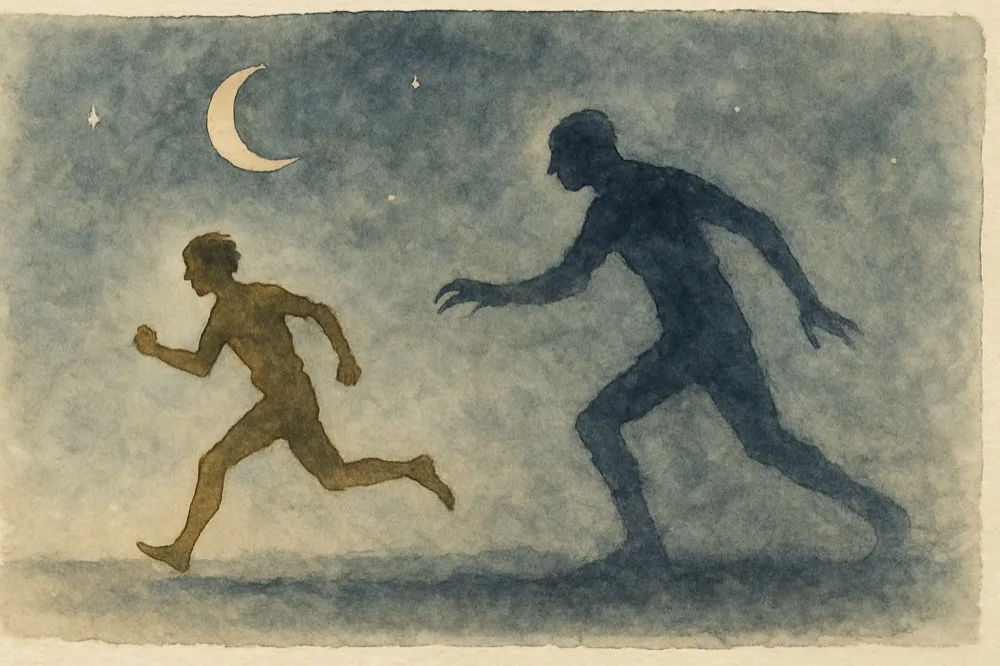
A nightmare that keeps returning is different from a bad dream. It arrives with the weight of something known: the same house, the same pursuer, the same moment just before you wake. People start dreading sleep. Most want two things, to understand why it keeps happening and to make it stop. This guide takes both seriously, without promising more than is honest.
Why do I have recurring nightmares?
Every dream, in Jung's view, responds to the dreamer's conscious situation, often by showing what consciousness leaves out. When the conscious attitude does not change, the dream has no reason to change either. A recurring nightmare is the psyche raising its voice: the same image, with the same fear, until something is heard. Many people notice their recurring nightmare returns under particular pressures: before exams, during conflict, at work deadlines, around anniversaries. The timing is often the best clue to its meaning. Other kinds of recurring dream are covered in our guide to recurring dreams.
What does a recurring nightmare mean?
The meaning lives in the image, not in a general rule. A recurring chase usually concerns something you are avoiding. A recurring fall concerns losing ground or control. A recurring house with a locked room concerns a part of your life or self you have closed off. The most useful approach is to ask what the frightening figure or event would be in waking terms, and what you do in the dream: run, hide, freeze, fight. The dream's response often mirrors your waking one. The common patterns are set out in our guide to nightmares.
Nightmares that replay something real
Jung observed that after a shock, dreams can repeat the event almost unchanged, and that these are less symbolic than ordinary dreams. They are an attempt by the psyche to process something overwhelming. If your recurring nightmare replays an accident, an assault, a war, a medical emergency or another frightening event, interpretation is not the first step. Please read the section below on talking to someone.
How the nightmare changes
Recurring nightmares are rarely identical forever. Small changes are worth recording: the pursuer getting closer or further away, a door that was locked now ajar, you turning to look for the first time. In the Jungian method these shifts often show the conscious attitude moving. A nightmare that softens, or in which you act differently, is often one that is beginning to be understood.
The flood in the school corridor
The dream below is invented for illustration. It shows the method, not anyone's real dream.
“It is the same every time. I am in my old secondary school and water starts coming under the classroom doors. I run down the corridor but every exit is locked. The water reaches my chest and I wake up gasping. This time, just before I woke, I saw a teacher standing calmly in a doorway.”
Symbols
A school filling with water. Locked exits. A new detail: a calm teacher in a doorway.
Floods are among the oldest images of being overwhelmed by what rises from below, from the biblical flood to the many deluge myths. Schools in dreams often carry being tested, judged or made to perform.
Analysis
The dreamer says the nightmare began in her twenties and returns whenever her workload peaks. She runs a small business and does everything herself. Asked about the teacher, she remembers a music teacher who once told her she did not have to be perfect to be good.
Her waking attitude is that she must manage everything alone. The flood compensates by showing what that attitude feels like from inside: rising pressure, no way out. The calm teacher is new, and offers what her attitude does not allow.
One interpretation among several: the dream is beginning to change because a helping figure has appeared. The question is whether she will walk toward the doorway.
Ritual
Write the dream again, and this time have yourself walk to the teacher's doorway. Write what the teacher says. Then name one task this week you could hand to someone else.
How to stop recurring nightmares
No one can honestly promise to stop a nightmare. What can be offered is a set of practices that change your relationship to it, and often its frequency.
Write it down
Record each recurrence, with the date and what was happening in your life. The pattern of when it comes is often more revealing than the dream itself.
Change the ending while awake
In daylight, write the dream out and then write a different ending, one in which you act rather than flee or freeze. Rehearse the new version for a few minutes each day. Clinicians use a structured form of this, and a GP or therapist can tell you more about it.
Turn toward the image
The Jungian practice of active imagination invites you to return to the dream image calmly and let it continue, asking the pursuer or the presence what it wants. This is best done in daylight, and gently. If it becomes overwhelming, stop.
Look after sleep itself
Regular sleep times, a quieter hour before bed and less alcohol late in the evening are ordinary steps many people find help them sleep more steadily.
Recurring nightmares and sleep paralysis
Some people have recurring nightmares that end in sleep paralysis, or in which they seem to wake and cannot move. If this sounds familiar, our guide to sleep paralysis dreams covers it in detail. For the commonest recurring nightmare of all, see dreams about being chased.
When to talk to someone
Talk to your GP if recurring nightmares are making you dread sleep, leaving you exhausted, or affecting your work, relationships or mood. Your GP can refer you to a sleep clinic or to a therapist. If the nightmares replay a traumatic event, or began after one, please ask for support from a professional who works with trauma; there are recognised approaches, and you do not need to manage this alone.
Common questions
What does a recurring nightmare mean?
In the Jungian method a recurring nightmare usually pictures something not yet faced or resolved, and the repetition is part of the message. The meaning lies in the image itself and in what you do in the dream, so your own associations matter most.
Why do I keep having the same nightmare?
The same nightmare tends to return while the situation or attitude it pictures stays unchanged. Many people notice it comes back under particular pressures, and that timing is often the best clue. Some recurring nightmares replay a real trauma and need professional support.
How do you stop recurring nightmares?
No one can promise to stop a nightmare, but some practices change your relationship to it: recording it, rewriting the ending while awake, and turning gently toward the image. If nightmares are affecting your sleep or follow a trauma, talk to your GP.
Written by the Coniunctio editorial team and reviewed against our editorial standards. Coniunctio offers reflection, not diagnosis or prediction. If a dream is tied to distress, please speak to a professional.
Related guides
What is Coniunctio?
A dream can stay with you all day and still make no sense. Coniunctio analyses it in Jung's method, symbol by symbol, so you can see what it is working on and what to do with it.
- A Jungian analysis of your dream, symbol by symbol
- A ritual to work with it: three offered, you choose one
- Follow-up questions and notes on every analysis
- A dream archive that grows as you feed it