Talking to a dead person in a dream
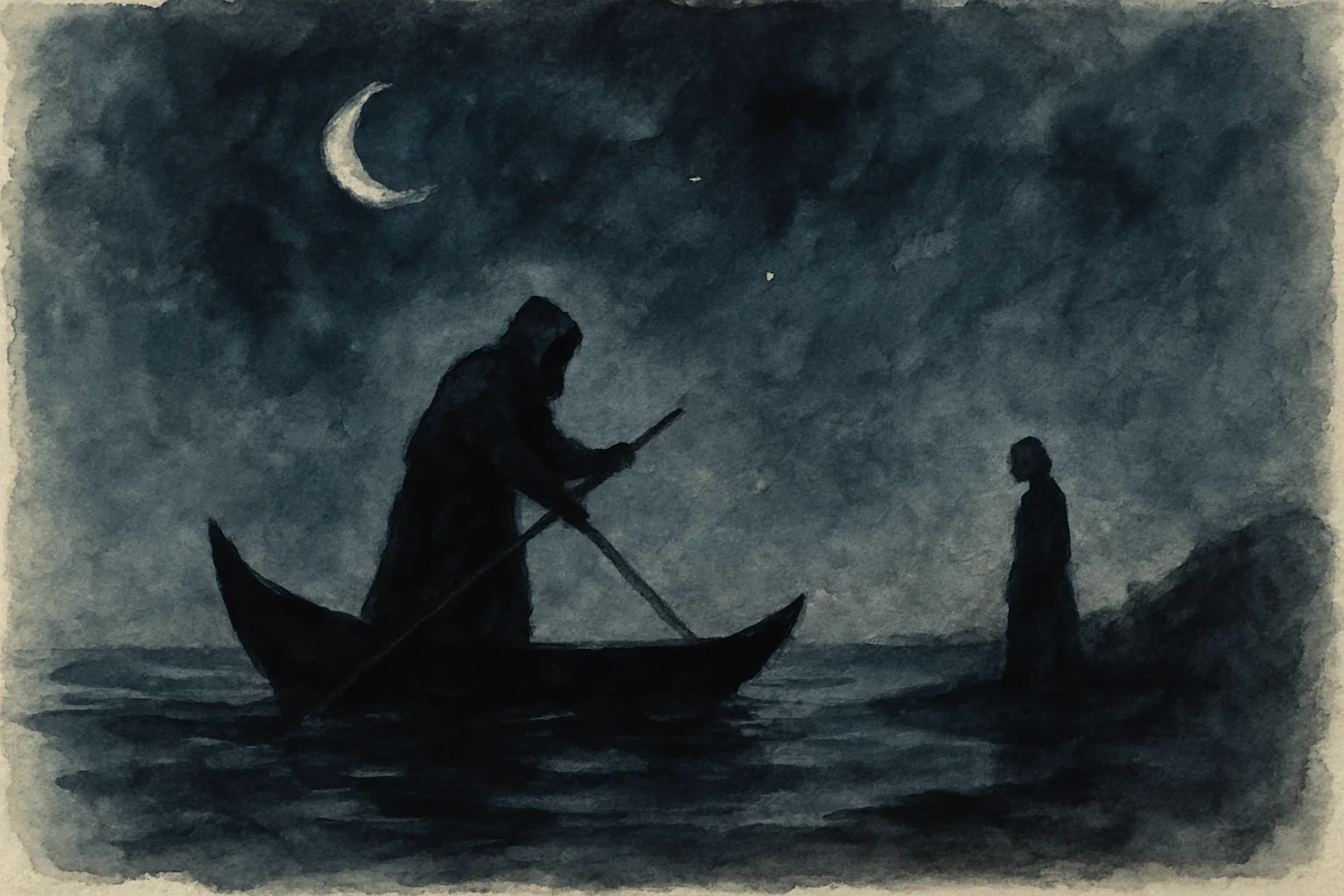
Most dreams of the dead are wordless. The person is present, and that is all. So when someone who has died speaks to you in a dream, it stays with you. You may remember a single sentence for years. You may wake unsure whether it was a message, a memory or something your own mind made. This page looks at conversations with the dead in dreams: what they may mean, what changes with who is speaking, and how to work with the words.
Why the dead speak in dreams
Grief leaves conversations unfinished. There is the thing you meant to say at the hospital, the argument that was never resolved, the question about the family you never asked. Dreams return to those gaps. When the dead speak, the psyche is often giving voice to what the relationship still holds, in both directions.
There is also a simpler reason. We carry the voices of the people we love. Years of conversation are stored in us: their phrases, their tone, the way they would answer a particular worry. In a dream that inner voice can speak freely. For the wider picture of death as a symbol, see dreams about death.
What is the spiritual meaning?
Many traditions hold that the dead can speak to the living in dreams, and for some readers that is the plain meaning. Others see such dreams as grief's own work. The Jungian method does not try to settle the question. Jung took dreams of the dead seriously, wrote about his own, and treated them as real psychic facts whatever their source. The useful step is the same either way: listen closely to what was said, and ask what it asks of you now.
When dead relatives talk to you
Relatives tend to speak in character. A grandmother tells you to eat properly; a father tells you to check the tyres. Often the message is ordinary, and that ordinariness is part of its comfort. Sometimes it is pointed: "you need to stop", "let her go", "I am not angry". These phrases are worth writing down exactly, because they often answer a question you have been asking awake without saying it aloud.
On the subjective level, a relative's voice can also be your own wisdom borrowing a trusted form. If your late uncle tells you to leave a job, the dream may be letting you hear a judgement you already hold. There is more on the wider theme in dreaming about dead relatives.
Dreaming of a dead friend talking to you
Friends who die are often young, and the loss can be sudden. When a dead friend talks to you in a dream, the conversation may pick up where your shared life left off: jokes, plans, the life you expected to share. It can also carry survivor's guilt, or the question of how to live the years they did not have. A friend speaking calmly in a dream sometimes marks the beginning of peace with that question. See dreaming of a dead friend for more.
When you cannot speak, or they will not
Many people dream that they try to speak to the dead and no sound comes out. Others dream the person moves their lips but cannot be heard. These dreams often picture the unfinished part of the relationship itself: the words that were never exchanged. They are painful, but they show exactly where grief is still at work.
A related fear is being called by the dead. Some folk traditions warn against answering, or against following them. From the Jungian view, being called may picture a pull toward the past, or toward the person's way of life. It is not a sign that you are about to die.
Speaking back: active imagination
Jung developed a method he called active imagination: returning to a dream figure while awake and continuing the conversation in writing. It is not pretending the dead are present. It is giving the inner figure room to speak, and listening without censoring. For many people grieving, it allows the conversation the dream began to go on. There is a guide to active imagination if you want to try it carefully.
The grandfather in the boat
The dream below is invented for illustration. It shows the method, not anyone's real dream.
“My grandfather is rowing a small boat on a lake and I am sitting opposite him. I ask him if he was disappointed in me. He laughs and says, you always ask the wrong question. Ask me what I would have done differently. Then I wake up.”
Image
A dead grandfather rowing. The dreamer facing him, carried. A question about disappointment. A correction, and a better question.
Being rowed across water is an old image of transition. A wise elder who answers a question with a question appears in fairy tales and religious stories worldwide.
Association
The dreamer gave up studying law, which his grandfather had paid for, and has felt he betrayed him. His grandfather was a fisherman who left school at fourteen and talked often of what he would change.
Compensation
Awake, the dreamer keeps asking whether he let his grandfather down. The dream refuses that question and offers another: the old man's own regrets. It compensates for a guilt that looks only backward.
One interpretation among several: the grandfather, as an inner figure, turns the dreamer from judgement toward learning. The boat suggests he is still being carried by the relationship, not weighed down by it.
Practice
Write the question the grandfather proposed at the top of a page, and answer it in his voice for ten minutes without stopping. Then say it back once, aloud.
When to talk to someone
Conversations with the dead in dreams are part of ordinary grief. Speak to a GP, a therapist or a bereavement service if the voices feel frightening or commanding, if you begin hearing them while awake, or if the dreams leave you unable to manage your days. In the UK, Cruse Bereavement Support is free. If a voice in a dream or in waking life tells you to harm yourself, or you have thoughts of ending your life, contact Samaritans on 116 123 in the UK or 988 in the US now.
The hub for dreams about people who have died gathers every related page.
Common questions
What does it mean when a dead person talks to you in a dream?
It often means the relationship is still active and something unfinished is being said. In the Jungian method the voice may also be your own judgement speaking through a figure you trust. The exact words are worth writing down.
What is the spiritual meaning of talking to a dead person in a dream?
Traditions differ, and many hold that the dead can speak to the living in dreams. The Jungian view treats the conversation as a real event in your inner life whatever its source. Either way, the question is what the words ask of you now.
Is it bad to talk to the dead in dreams?
No. Speaking with the dead in dreams is common in grief and is often comforting. If a voice ever feels threatening, or tells you to harm yourself, speak to a professional straight away.
Why can I not speak when I dream of a dead relative?
Losing your voice in such a dream often pictures words that were never said in life. It shows where grief is still at work. Writing down what you wanted to say can help.
Written by the Coniunctio editorial team and reviewed against our editorial standards. Coniunctio offers reflection, not diagnosis or prediction. If a dream is tied to distress, please speak to a professional.
Related guides
What is Coniunctio?
A dream can stay with you all day and still make no sense. Coniunctio analyses it in Jung's method, symbol by symbol, so you can see what it is working on and what to do with it.
- A Jungian analysis of your dream, symbol by symbol
- A ritual to work with it: three offered, you choose one
- Follow-up questions and notes on every analysis
- A dream archive that grows as you feed it
“Who looks outside, dreams; who looks inside, awakes.”