Dreaming about a miscarriage: what it may mean
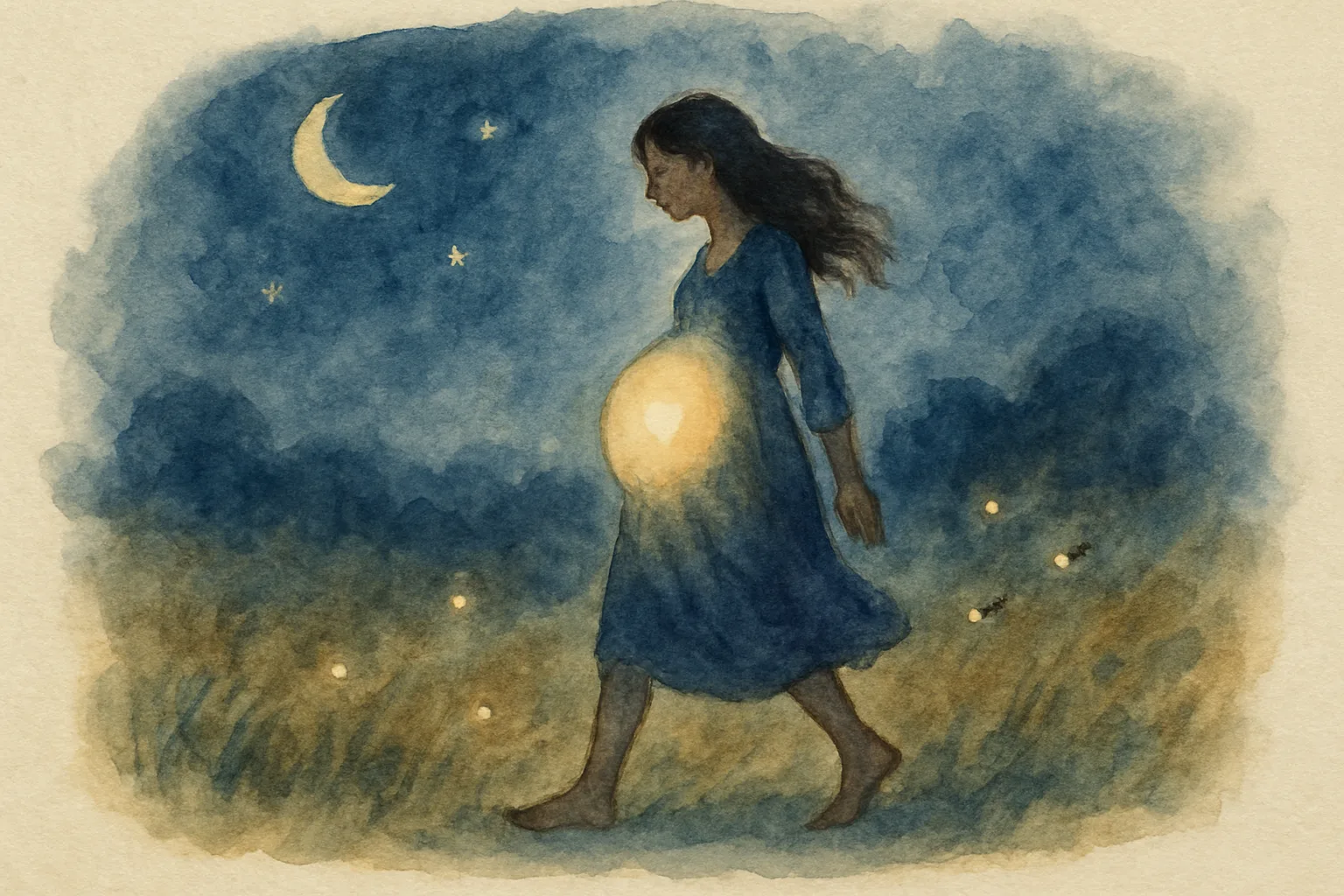
A dream of miscarriage can be one of the hardest dreams to wake from. If you are pregnant, it can leave you frightened for the rest of the day. If you have lost a pregnancy, it can bring the grief back with full force. If you are not pregnant at all, it can still leave a strange sense of loss. This page takes each of those situations in turn, carefully.
Does a miscarriage dream mean something will go wrong?
No. This is the first thing to say, because it is the fear most people wake with. A dream is made by your psyche from your feelings, memories and worries. It has no access to what is happening in your body, and it does not foretell events. If you are pregnant and have any physical concern, the right people to ask are your midwife, doctor or maternity unit, not the dream.
What the dream can do is show you, honestly, how much you are carrying. That is worth taking seriously in its own right.
Dreams about miscarriage while pregnant
Many pregnant people report dreams of miscarriage, especially in the early months when the pregnancy is still uncertain and often still private. The psyche rehearses what it fears most. In Jung's terms, the dream may be compensating for a waking effort to stay positive: the hope is conscious, the fear has been pushed aside, and the dream gives the fear its say.
These dreams can also arrive after a scan, a difficult appointment or someone else's news. Noticing when they come can help you see what has stirred them. Our wider guide to dreams about pregnancy covers the other dreams that often come with pregnancy.
Dreaming of miscarriage after a loss
If you have experienced a miscarriage, dreams about it are a common part of grief. They may replay what happened, or change it. The baby may appear in some form. Sometimes the dream is unbearable; sometimes it brings an unexpected tenderness.
From the Jungian view, the psyche returns to a loss because it is still being absorbed. These dreams are not a sign that you are failing to cope. They are part of how a loss that was often unseen by others is felt and honoured. If they come back again and again, our hub on recurring dreams explains why the psyche repeats, and the guidance on nightmares may help if they frighten you awake.
Dreaming of a miscarriage when you are not pregnant
When there is no pregnancy, the dream is usually symbolic. Pregnancy is the psyche's image of something developing. A miscarriage, then, pictures something that began, was hoped for and could not continue: a relationship, a business, a plan for a different life, a version of yourself.
Ask what in your life has recently ended before it could fully form. The dream often arrives when that loss has not been grieved because it seemed too small, or too private, to count.
What details change the meaning
Notice whether you were alone in the dream or with someone, and how they responded. A partner who is absent, or a doctor who does not listen, may say more about feeling unsupported than about the pregnancy. Notice too what you felt. Grief, panic, numbness and, sometimes, relief are all common. Relief can be hard to admit, but in a dream it may point to a pressure you have not named.
Where it happens matters. A miscarriage at work, in public or in a childhood home places the loss in a particular part of your life.
Biblical, Islamic and spiritual views
The Bible does not speak to dreams of miscarriage. It records meaningful dreams, as with Joseph and Daniel, and it also notes that many dreams come from the cares of daily life. Islamic tradition, drawing on hadith, distinguishes dreams that come from God, distressing dreams, and dreams that arise from one's own thoughts; a frightening dream is usually placed in the second or third group. If faith matters to you here, someone from your own tradition can guide you best.
The Jungian view sits alongside these. It does not treat the dream as an omen. It asks what in you is grieving, or afraid, and what that part needs.
What to do with the dream
If you are pregnant, first take care of the fear. Tell someone you trust that you had the dream; saying it aloud often loosens its grip. If you are not pregnant, write down what in your life the dream might be about, and allow it to be a real loss.
After a pregnancy loss, it can help to keep the dreams somewhere, in a notebook or a letter to the baby. You do not need to interpret them. Letting them be witnessed is often enough.
The empty shop
The dream below is invented for illustration. It shows the method, not anyone's real dream.
“I am pregnant, though I know I am not, and I am standing in my old shop. It is empty and the shelves are bare. I feel the pregnancy go, quietly, and nobody is there. I sit on the floor. A customer comes in and asks if we are open. I wake up crying.”
Symbols
A pregnancy the dreamer knows is not real. Her old shop, empty. A quiet loss with no witness. A customer asking if the place is open.
A pregnancy that ends early is an image of something hoped for that could not continue. An empty shop is an ending made visible.
Analysis
The dreamer is in her forties and not pregnant. She closed her shop eight months ago after five years of work and told everyone it was the right decision. She has not cried about it.
Her conscious attitude is practical: the business failed, she moved on. The dream gives the loss the weight of a miscarriage, something carried, hoped for and lost, with no one there to see.
One interpretation among several: the dream asks her to grieve what she has filed under sensible decisions. The customer's question may hint that something in her is still open.
Ritual
Write the shop a short letter of goodbye. Keep it, or put it somewhere it can rest.
When to talk to someone
If you are pregnant and have bleeding, pain or any physical worry, contact your midwife, doctor or maternity unit straight away; that comes before any dream. If anxiety about the pregnancy is affecting your sleep or days, tell your midwife or doctor, as support for anxiety in pregnancy is available.
If you have had a miscarriage and the dreams, or the grief, feel too heavy, please reach out to your doctor, a counsellor or a pregnancy loss support organisation. You do not have to carry this alone.
Common questions
Does dreaming of a miscarriage mean I will have one?
No. A dream cannot predict events or tell you anything about the health of a pregnancy; it reflects your feelings and fears. If you have any physical concern, contact your midwife or doctor.
Why do I dream about miscarriage while pregnant?
Many pregnant people do, especially early on. The dream often gives voice to a fear held back while you try to stay hopeful. It is a sign of how much you care, not of what will happen.
What does it mean to dream about miscarriage when not pregnant?
Usually it pictures something that began and could not continue, such as a plan, relationship or project. It often comes when that loss has not been fully grieved.
What is the biblical or Islamic meaning of a miscarriage dream?
The Bible does not address it directly, and Islamic tradition often places frightening dreams among those from distress or one's own thoughts. Neither treats it as a certain omen. Someone from your own tradition can guide you further.
Written by the Coniunctio editorial team and reviewed against our editorial standards. Coniunctio offers reflection, not diagnosis or prediction. If a dream is tied to distress, please speak to a professional.
Related guides
What is Coniunctio?
A dream can stay with you all day and still make no sense. Coniunctio analyses it in Jung's method, symbol by symbol, so you can see what it is working on and what to do with it.
- A Jungian analysis of your dream, symbol by symbol
- A ritual to work with it: three offered, you choose one
- Follow-up questions and notes on every analysis
- A dream archive that grows as you feed it
“The dream is a little hidden door in the innermost and most secret recesses of the soul, opening into that cosmic night which was psyche long before there was any ego-consciousness.”