Can a dead person visit you in your dreams?
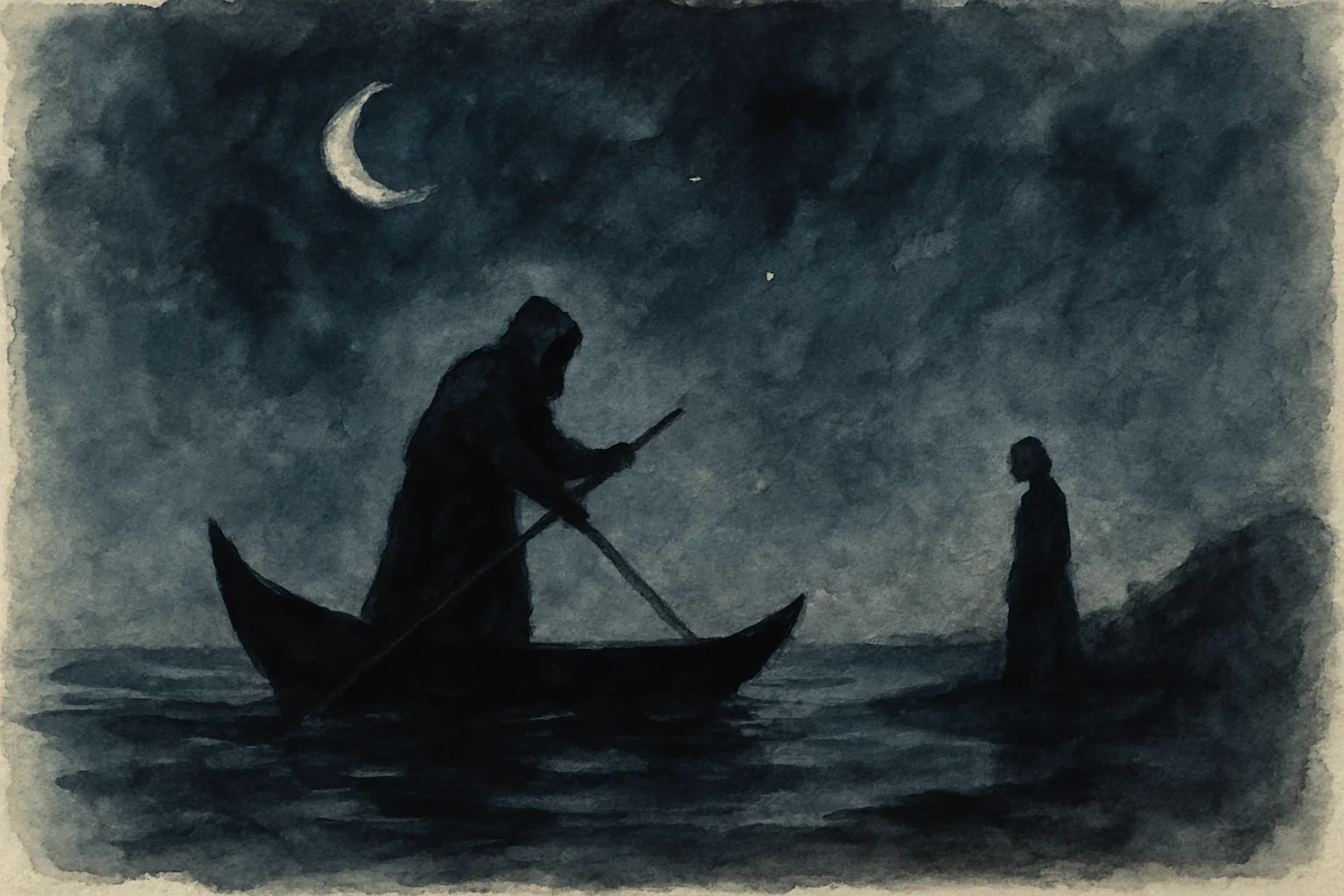
Many people who have lost someone describe a dream that felt different from all the others. The person who died was simply there, clear and present, often well and calm, sometimes with a short message. Waking, the dreamer is sure it was a visit. This guide does not try to talk anyone out of that experience. It sets out what such dreams are like, why they happen, and how the Jungian method approaches them.
What a visitation dream is like
People who have them describe recognisable features. The dead person usually looks well, often younger or healthier than at the end. The setting can be ordinary or strangely bright. The dream feels more real than most, and is remembered clearly for years. There is often a brief message, spoken or felt: I am all right, do not worry, I love you. The dreamer frequently wakes with peace rather than grief. Not every dream of the dead is like this, and dreams in which the person seems troubled or lost are discussed in our guide to dreams about people who have died.
Why do dead people visit me in my dreams?
On the psychological level, grief is the long work of moving a relationship from the outer world into the inner one. Dreams are where much of that work happens. A visitation dream may arrive when you most need reassurance, at an anniversary, or when you have been carrying guilt or worry about how the person died. It may also come when you have begun to move on, as though giving permission. Our guide to dreams about death explains how the psyche uses death images more broadly.
How Jung approached these dreams
Jung took such experiences more seriously than most psychologists of his time. In his memoir he describes dreaming of his father after his death, and later of his wife after hers, and he did not reduce these dreams to wish-fulfilment. He treated them as genuine encounters with the psyche, whose source he left open. That is the stance of the method here. The figure in the dream is at least an image of the person as you carried them, with all the love and history between you. Whether it is more than that is for you and your beliefs to decide.
What the visit brings
The useful question is less whether it was really them than what they brought. Notice what they said, if anything; what they were wearing or doing; whether they touched you; how they left. A message to stop worrying may answer a worry you have been carrying alone. A gift may point to a quality of theirs you now need. A goodbye may be the one that real life did not allow.
The grandmother at the window
The dream below is invented for illustration. It shows the method, not anyone's real dream.
“My grandmother, who died in March, is sitting by the kitchen window in her old house, shelling peas. She looks about sixty and very well. She says, "You did everything right, love." I sit beside her and we do not talk. The light is very bright. I wake up and the room smells of her soap.”
Symbols
A grandmother restored to health, at her old task. A sentence of absolution. Bright light, silence, and a smell that persists on waking.
Light in dreams of the dead appears across many traditions as an image of a changed state. Shelling peas, a patient domestic task, is the kind of ordinary gesture that carries a whole relationship.
Analysis
The dreamer says she was the one who arranged her grandmother's care home, and has felt for months that she moved her too soon. She has not said this to anyone.
Her waking attitude is self-reproach. The dream answers it directly, in her grandmother's voice, and restores her grandmother to an age before any of those decisions had to be made.
One interpretation among several: whatever its source, the dream releases a guilt the dreamer could not release alone, and returns the relationship to its older, simpler warmth.
Ritual
Write the sentence your grandmother said on a card and keep it where you will see it. When the guilt returns, read it once, slowly.
Can the dead visit you in your dreams in Islam?
Islamic tradition holds that the soul is taken in sleep as well as in death, and the Quran speaks of God taking souls at death and during sleep, returning those whose time has not come. Classical scholars such as Ibn al-Qayyim wrote that the souls of the living and the dead may meet in sleep. Islamic teaching also distinguishes good dreams from disturbing ones. A Muslim reader who sees a loved one in a dream may find comfort in this, and a scholar they trust can guide them further.
Christian and other traditions
Christian traditions vary. Some hold that the dead may appear in dreams by God's permission; others counsel caution and discernment. Many cultures, from Mexico's Day of the Dead to ancestral traditions in Africa and East Asia, treat dreams of the dead as a living part of the relationship between generations. The Jungian method respects each of these views without needing to choose between them.
What to do after a visitation dream
Write it down in full, as soon as you can, including the feeling on waking. Do not hurry to interpret it. If it brought comfort, let it. If it raised something unfinished, you might write a reply. Some people mark the dream with a small act: lighting a candle, visiting a place they shared, telling someone who also loved the person. Our guides to dreaming about a late husband and dead parents in dreams look at particular relationships.
When to talk to someone
If dreams of someone who has died are distressing, frequent enough to disrupt your sleep, or make you feel you cannot go on without them, please speak to your GP, a grief counsellor or a bereavement service. Comforting dreams are a gift; distressing ones are a sign that grief may need more support than you are getting.
Common questions
Can a dead person visit you in your dreams?
No psychology can settle whether the dead visit us, and beliefs differ. What is clear is that visitation dreams are common, vivid and often comforting. The Jungian method treats them as real events in the psyche and attends to what they bring.
What does it mean when a deceased loved one visits in a dream?
It often brings reassurance, a message, or a goodbye that waking life did not allow. Psychologically it is part of grief, moving the relationship inward. What they said and how you felt on waking are the most important details.
Can the dead visit you in your dreams in Islam?
Islamic tradition holds that souls are taken in sleep as well as at death, and classical scholars wrote that the living and the dead may meet in sleep. Many Muslims find comfort in this. A scholar you trust can guide you further.
Why do dead people visit me in my dreams?
These dreams often come when you most need reassurance, at an anniversary, or when guilt or worry about the death is unresolved. They are a normal part of grief, and they tend to change as grief changes.
Written by the Coniunctio editorial team and reviewed against our editorial standards. Coniunctio offers reflection, not diagnosis or prediction. If a dream is tied to distress, please speak to a professional.
Related guides
What is Coniunctio?
A dream can stay with you all day and still make no sense. Coniunctio analyses it in Jung's method, symbol by symbol, so you can see what it is working on and what to do with it.
- A Jungian analysis of your dream, symbol by symbol
- A ritual to work with it: three offered, you choose one
- Follow-up questions and notes on every analysis
- A dream archive that grows as you feed it