Why do I keep dreaming about my childhood home?
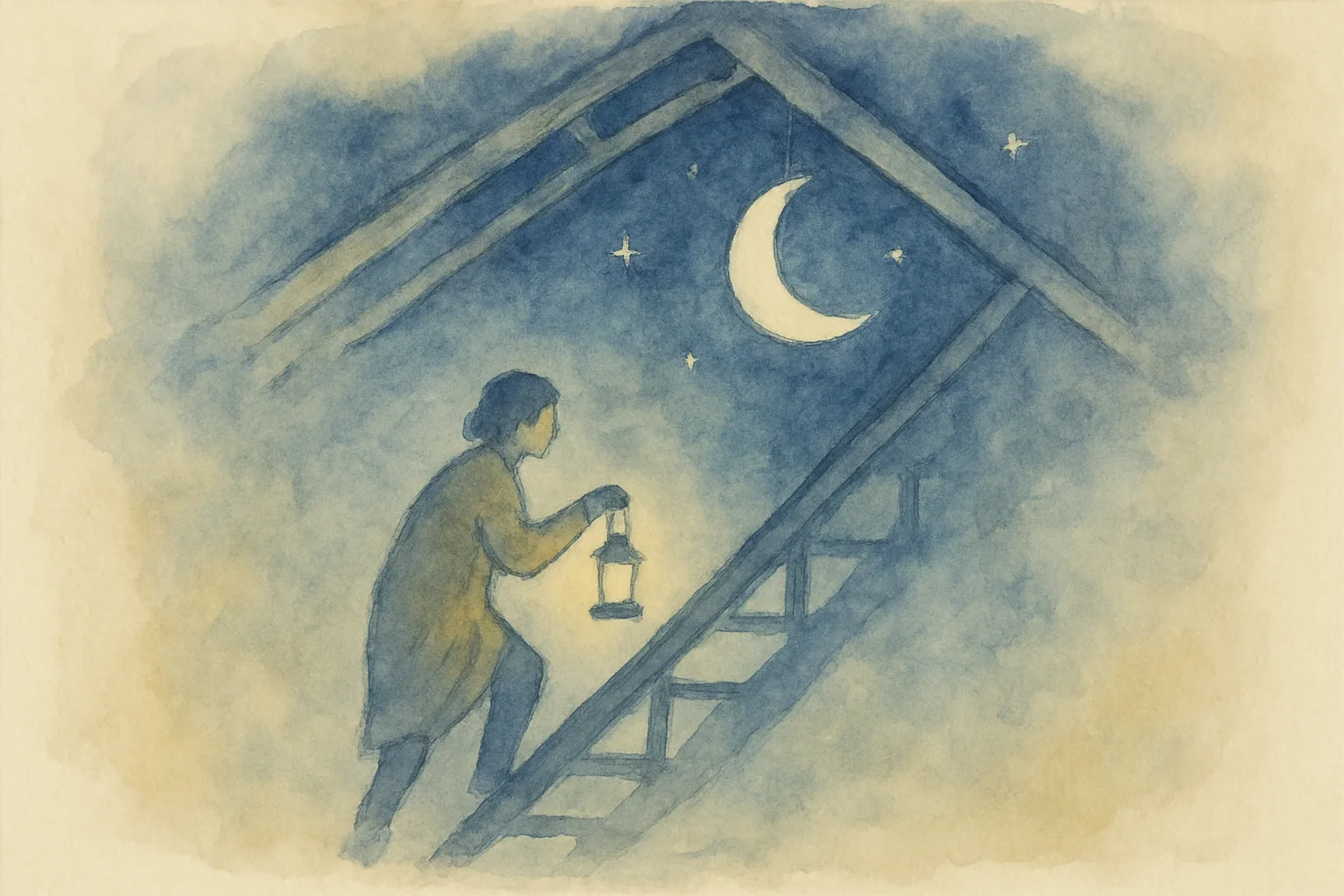
Some people leave their childhood home and never dream of it. Others go back every few nights. The rooms are often exact, down to the wallpaper, though the layout may be wrong. Sometimes it is comforting. Sometimes it is eerie or frightening. Almost always it raises the same question: why do I keep going back there?
What does it mean to dream of your childhood home?
Jung treated the house in dreams as an image of the psyche, a structure with floors and rooms that hold different layers of experience. Our main guide to dreams about your house explains that in full. The childhood home is a special case. It is the house where your first sense of self was built.
When you dream of it, the psyche is usually returning to something laid down there. That might be a feeling of safety, a fear, a rule about how to behave, or a version of yourself that you left behind when you left.
Why do I keep dreaming about my childhood home?
A recurring childhood-home dream often tracks the present more than the past. It may arrive when a current situation echoes an old one: a boss who reminds you of a parent, a relationship that repeats a family pattern, a new home that you are trying to make your own. The psyche goes back to the original setting to work on the new version.
Jung noted that what is not made conscious tends to return. Our hub on recurring dreams covers that principle, and the page on recurring places in dreams looks at dream settings in general.
Bad dreams about your childhood home
Not everyone's childhood home was safe. If yours held conflict, fear or loss, dreams of it can be distressing. They may replay old scenes or turn the house into something sinister. The psyche often returns to such places in an effort to work on what happened there, and a change in how you act in the dream, leaving, speaking, standing your ground, is worth noticing over time.
If these dreams are frequent, frightening or linked to painful memories, the guidance on when to talk to someone below applies.
Details that change the meaning
Notice whether the house is as it was, or altered. A familiar house with new rooms may point to capacities you did not have as a child. A house in ruins may picture a past that has lost its hold, or a sense that something from childhood is falling apart. Strangers living there can suggest that the old self has been replaced, or that something unknown has moved into old territory.
Your age in the dream matters. Being a child again suggests you are revisiting an old feeling from the inside. Visiting as an adult suggests you are looking back with present eyes.
Dreaming of the childhood home after it is sold or gone
When the house has been sold, demolished or left after a parent's death, dreams of it can carry grief. The psyche keeps the house even when the building is gone. These dreams often come after a loss in the family. If they involve a parent who has died, our hub on dreams about people who have died may help.
Biblical and spiritual views
Some Christians see a return to a childhood home as a call to remember one's roots or first faith. Other spiritual approaches see it as a sign of unfinished business with the past. The Jungian view is compatible with both. It asks which part of you lives in that house, and what it needs from you now.
The back bedroom
The dream below is invented for illustration. It shows the method, not anyone's real dream.
“I am in my parents' old house. Everything is the same except the back bedroom, which has been painted yellow and has a desk by the window. I sit down and start writing. My mother calls me for dinner and I say I'm busy. She doesn't seem to mind.”
Symbols
The childhood home, unchanged except for one room. Yellow paint. A desk by the window. A mother's call, refused without conflict.
A new room in an old house is a common image of a capacity growing within old structures. Writing at a window suggests a view outward.
Analysis
The dreamer grew up being told that writing was a hobby, not a career. She is now considering a part-time course in journalism. She says she has made her peace with her parents' views.
Her conscious attitude is that the past no longer affects her. The dream returns her to the family house, where a room has been changed to hold the writing she was discouraged from. Her refusal of dinner meets no resistance.
One interpretation among several: the dream shows she can claim a room for herself inside the family structure, and the old prohibition may be weaker than she fears.
Ritual
Draw the floor plan of your childhood home from memory. Mark the room you would claim, and write what you would do there.
When to talk to someone
If dreams about your childhood home are tied to memories of harm, or leave you anxious, low or unable to sleep, please talk to a doctor or therapist. Dream work can sit beside that support, but painful childhood experiences deserve care from someone trained to give it.
Common questions
What does it mean to dream of your childhood home?
It usually returns you to something formed in that house: a feeling, a pattern or a part of yourself from that time. What happens there shows what is being revisited.
Why do I keep dreaming about my childhood home?
Often because something in your present echoes something from your past, and the psyche goes back to the original setting to work on it.
Why do I have bad dreams about my childhood home?
If the home held conflict or fear, the psyche may return there to work on it. If the dreams are distressing, talking to a therapist can help.
What is the biblical meaning of dreaming of your childhood home?
Some Christians see it as a call to remember your roots or first faith. The Jungian view asks which part of you lives in that house and what it needs.
Written by the Coniunctio editorial team and reviewed against our editorial standards. Coniunctio offers reflection, not diagnosis or prediction. If a dream is tied to distress, please speak to a professional.
Related guides
What is Coniunctio?
A dream can stay with you all day and still make no sense. Coniunctio analyses it in Jung's method, symbol by symbol, so you can see what it is working on and what to do with it.
- A Jungian analysis of your dream, symbol by symbol
- A ritual to work with it: three offered, you choose one
- Follow-up questions and notes on every analysis
- A dream archive that grows as you feed it
“The dream is a little hidden door in the innermost and most secret recesses of the soul, opening into that cosmic night which was psyche long before there was any ego-consciousness.”